Landscape Character Assessment for Swindon Borough
The draft Landscape Character Assessment for Swindon Borough has been prepared by Lepus Consulting to distinguish between the varied and valued landscape character areas surrounding Swindon.
We welcome your feedback on the draft Swindon Landscape Character Assessment.
Landscape Character Assessment is the process of identifying and describing variation in the character of the landscape. It seeks to identify and explain the unique combination of elements and features (characteristics) that make landscapes distinctive. This process results in the production of a Landscape Character Assessment¹.
Landscape character may be defined as a distinct and recognisable pattern of elements or characteristics in the landscape that make one landscape different from another, rather than better or worse.
Eight Landscape Character Areas (LCAs) have been identified within the Swindon Borough. This website provides a detailed overview of each LCA including a description, key characteristics, designations and policy, forces for change and landscape guidelines to plan, manage and protect distinctiveness. The eight LCAs include:
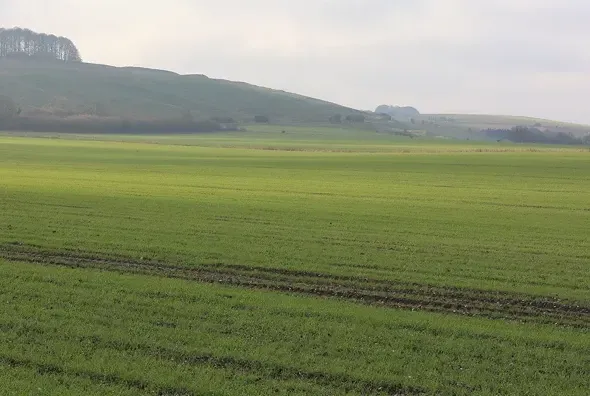
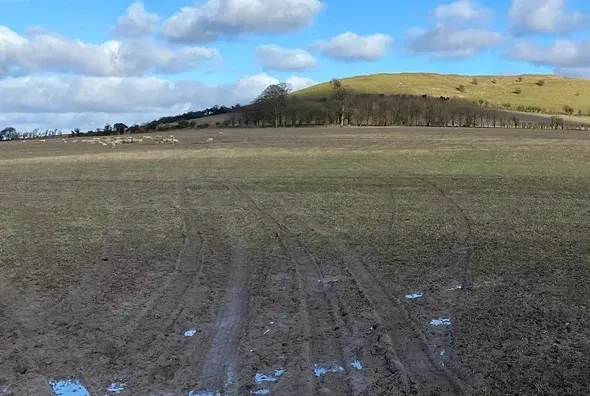
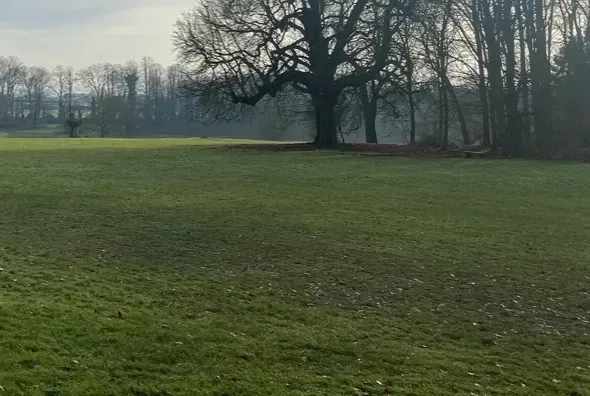
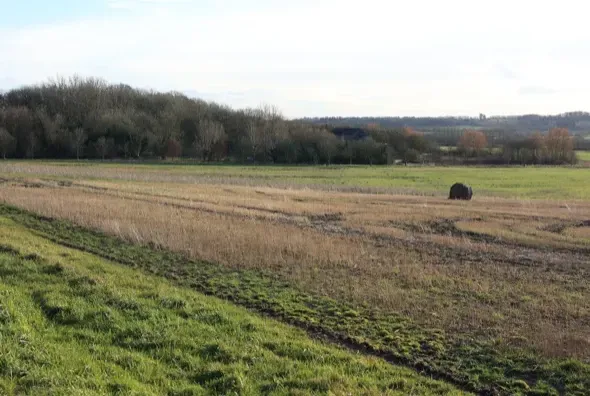
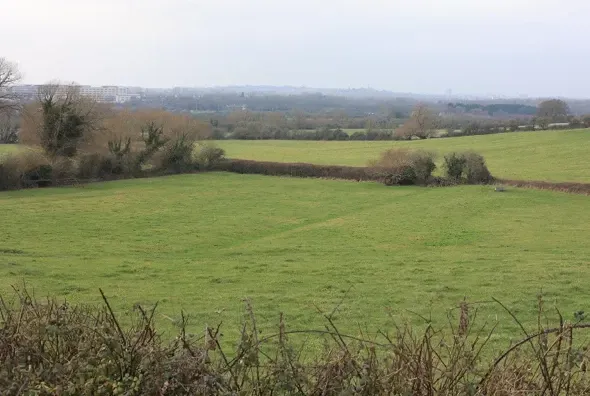
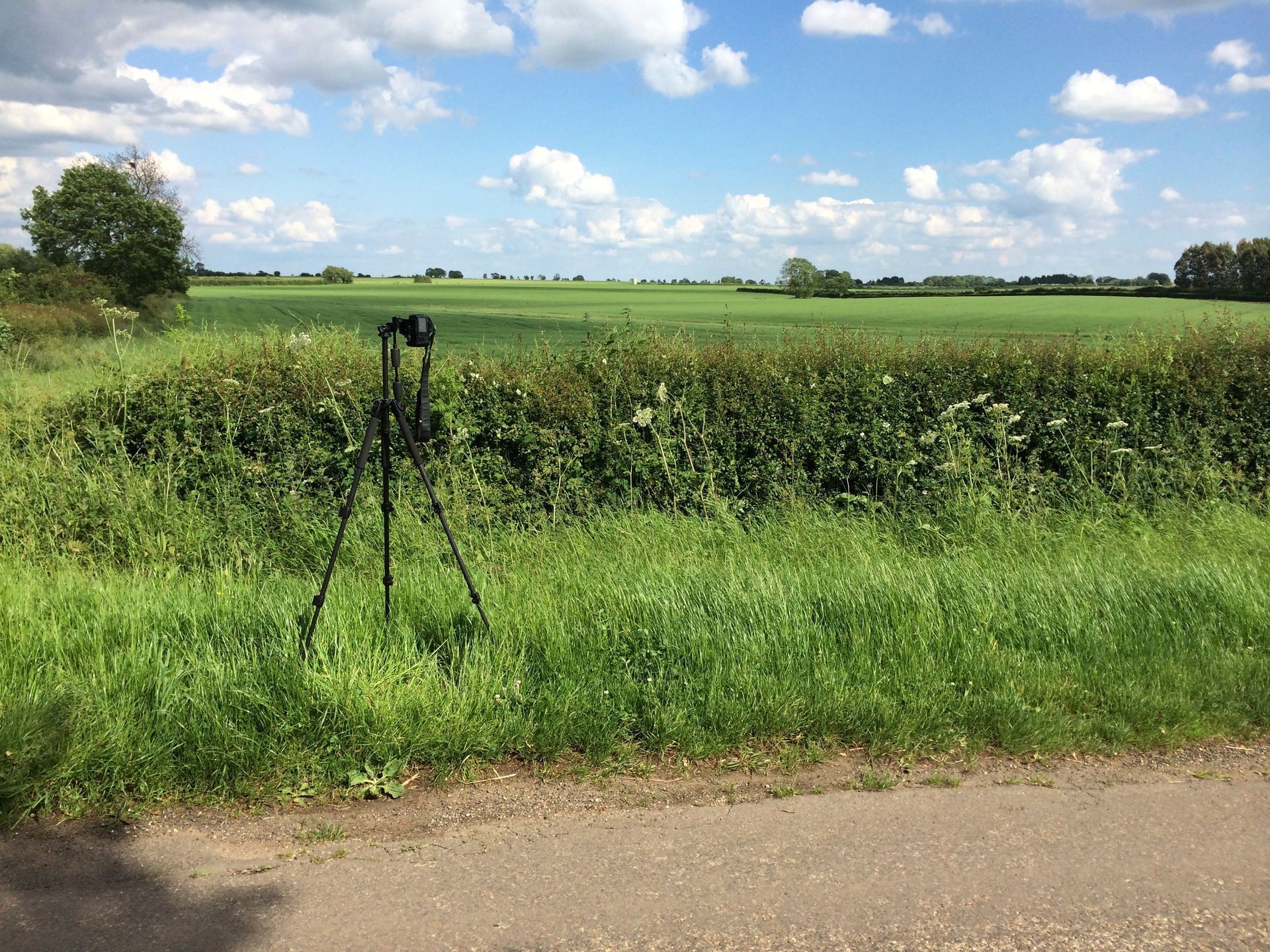
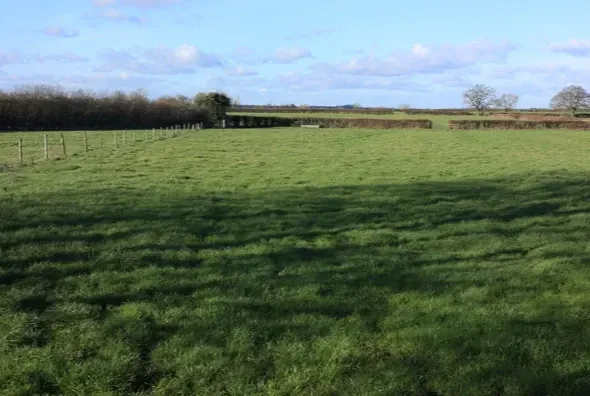
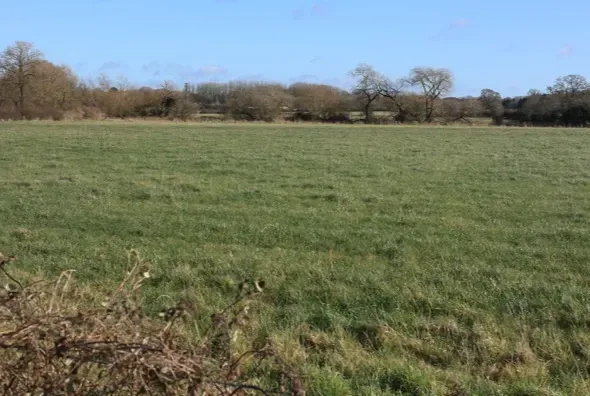
You can access a more detailed description of each of the LCAs by clicking on their associated links above.
The location of the eight LCAs
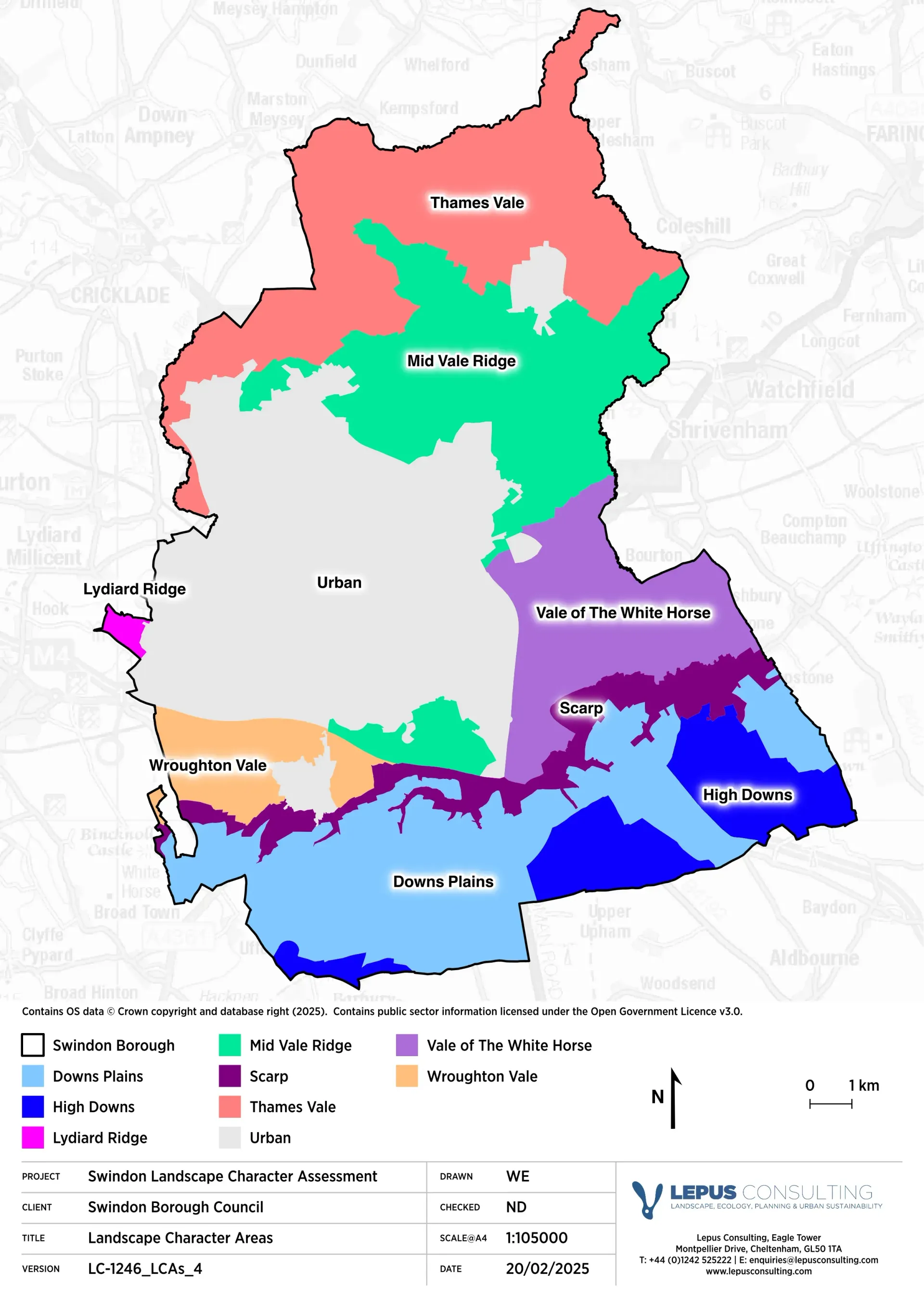
The information included in this Landscape Character Assessment is for the use of a variety of stakeholders including planning applicants, developers, development management officers and neighbourhood development plan groups. This Landscape Character Assessment should be used to understand the distinctive landscape qualities of an area to give context to scheme proposals. The prevailing character of the landscape will help to shape the design and layout of future development within Swindon Borough.
Lepus Consulting has prepared the draft Landscape Character Assessment for Swindon Borough Council. The full draft report can be downloaded here:
We welcome your feedback on the draft Swindon Landscape Character Assessment. This will inform the final version of the Swindon Landscape Character Assessment. It will help us gain a deeper understanding of how the landscape of Swindon is valued now, and shape how the landscape is managed in the future. Click below to submit your feedback:
North Wessex Downs National Landscape
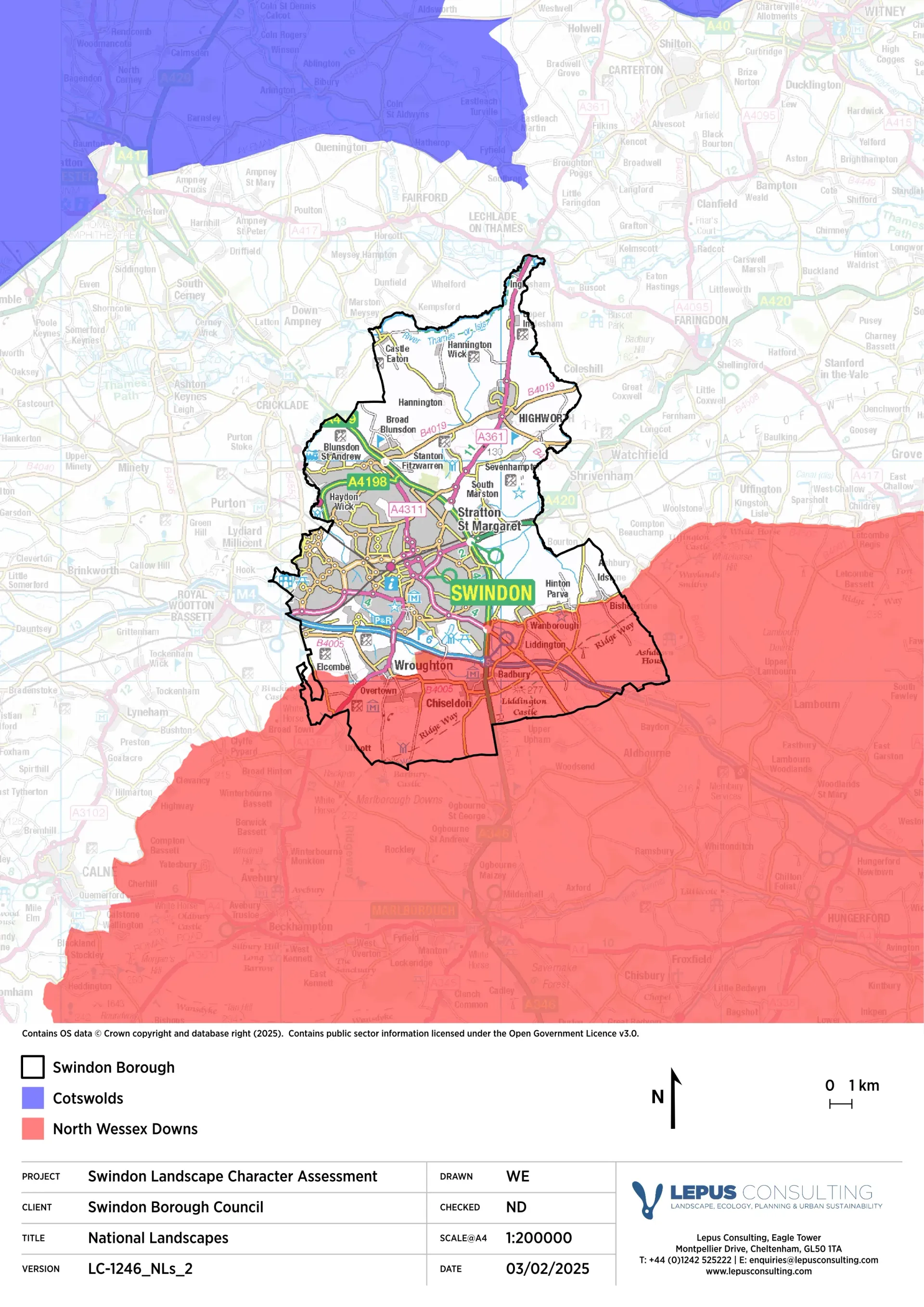
National Landscapes (formerly Areas of Natural Beauty (AONB)) are designated areas of exceptional landscape quality and distinctive character. The North Wessex Downs National Landscape is an expansive chalk downland landscape which covers approximately a quarter of the borough in the south. The North Wessex Downs AONB Management Plan 2019-2024² describes the landscape as:
“a visibly ancient landscape of great beauty, diversity and size. It embraces the high, open arable sweeps of the chalk downs and dramatic scarp slopes with their prehistoric monuments and beech knolls, the moulded dip slopes, sheltered chalk river valleys, intimate and secluded wooded areas and low-lying heaths with a rich mosaic of woodland, pasture, heath and commons”.
The special qualities of the North Wessex Downs National Landscape have been taken into consideration in the Landscape Character Assessment. The map above shows the National Landscapes in and around Swindon Borough.
Overall findings
The draft Landscape Character Assessment found that the landscape across the borough of Swindon varies greatly, ranging from the low-lying upper Thames clay vales in the north to the elevated rolling chalk downland hills within the North Wessex Downs National Landscape in the south. The urban area of Swindon town dominates the central region of the borough. Other notable urban areas include the market town of Highworth, the large village of Wroughton, and a number of smaller villages and hamlets. Beyond the urban areas, the predominant land use across the borough is agricultural, with extensive areas of arable and pasture.
The borough is also traversed by key transport routes, including the M4 motorway, the A419, the A420, and the Great Western Main Line. The landscape is undergoing considerable changes, with settlement expansion exerting pressure on the surrounding countryside, particularly to the east of Swindon. Land-based solar farms are an increasing feature across the landscape.
Key features which contribute positively to landscape character across the borough include:

Ancient woodlands, notably at Burderop Wood, Great Wood and Clouts Wood.
The open rolling downland landscape of the North Wessex Downs.
The northern scarp slope of the North Wessex Downs is a dramatic landform feature.
Distinctive Beech clumps crowning the summits at Liddington Hill and Barbury Castle.
Habitats to support biodiversity including areas of calcareous grassland, notably at Hinton Parva and Markham Hill.
Biodiversity designations that contribute to landscape character including nine SSSIs and seven LNRs.
A strong sense of time depth in places with the presence of scheduled monuments, notably Iron-Age hillforts at Liddington Castle and Barbury and strip lynchets at Bishopstone.
Church towers often form part of the skyline in views, including the church of St John and St Helen at Wroughton and the church of St Andrew at Upper Wanborough.
Small hills at Lus Hill and Crouch Hill which rise above the low-lying Thames Vale.
The extensive patchwork of arable and pastoral fields, lined with hedgerows and trees and interspersed with pockets of deciduous woodland.
Watercourses and their riparian zones including the River Thames, the River Ray and the River Cole.
The network of public rights of way including the Ridgeway and Thames Path National Trails which provide access to the countryside.
The five Country Parks in the borough provide spaces for open air recreation.
- Natural England (2014) An Approach to Landscape Character Assessment. Available at: https://www.gov.uk/government/publications/landscape-character-assessments-identify-and-describe-landscape-types [Accessed: 20/09/24]
- North Wessex Downs National Landscape (2019) North Wessex Downs AONB Management Plan 2019-2024. Available at: https://www.northwessexdowns.org.uk/our-work/management-plan/ [Accessed 28/01/25]